My Philosophy on Art
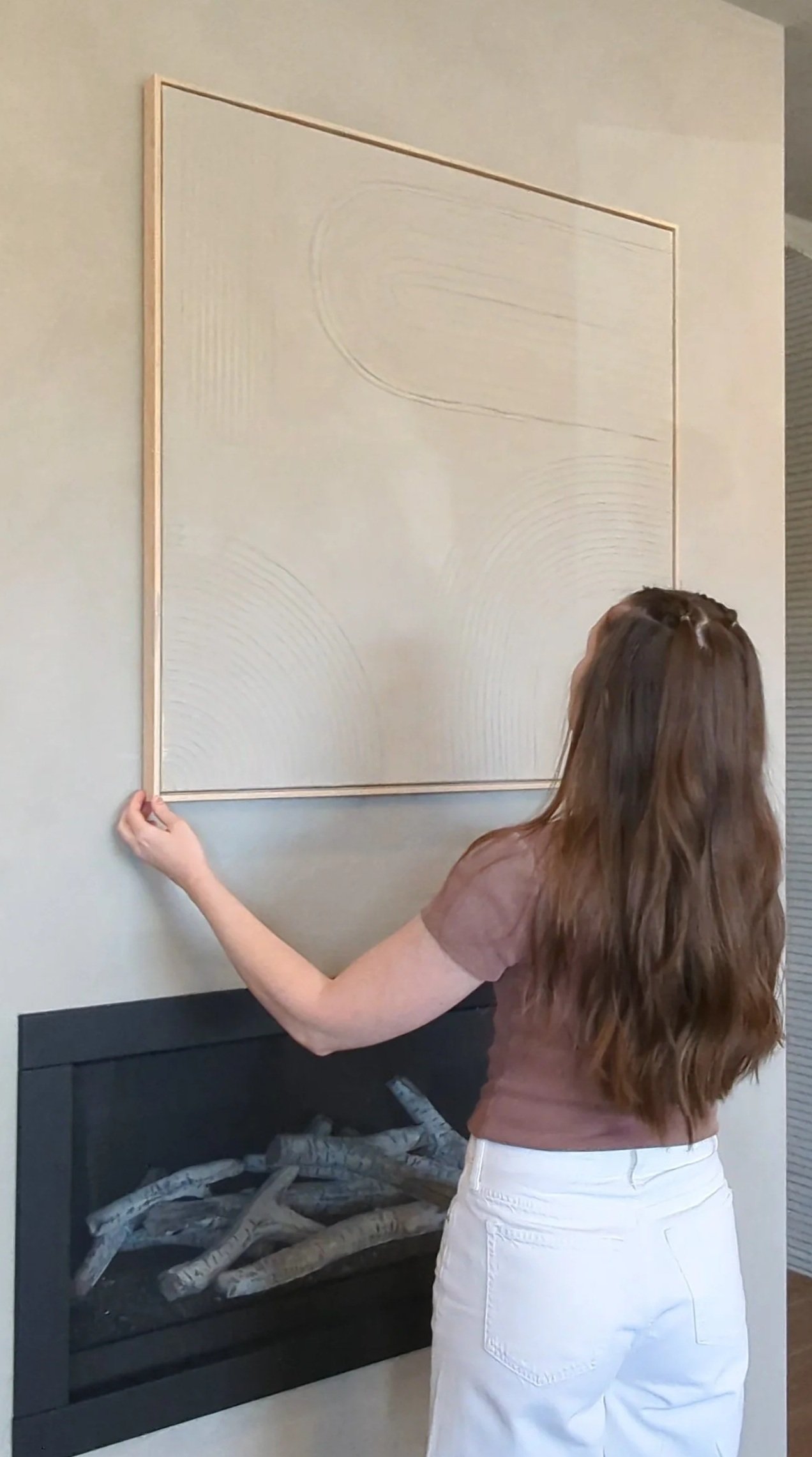
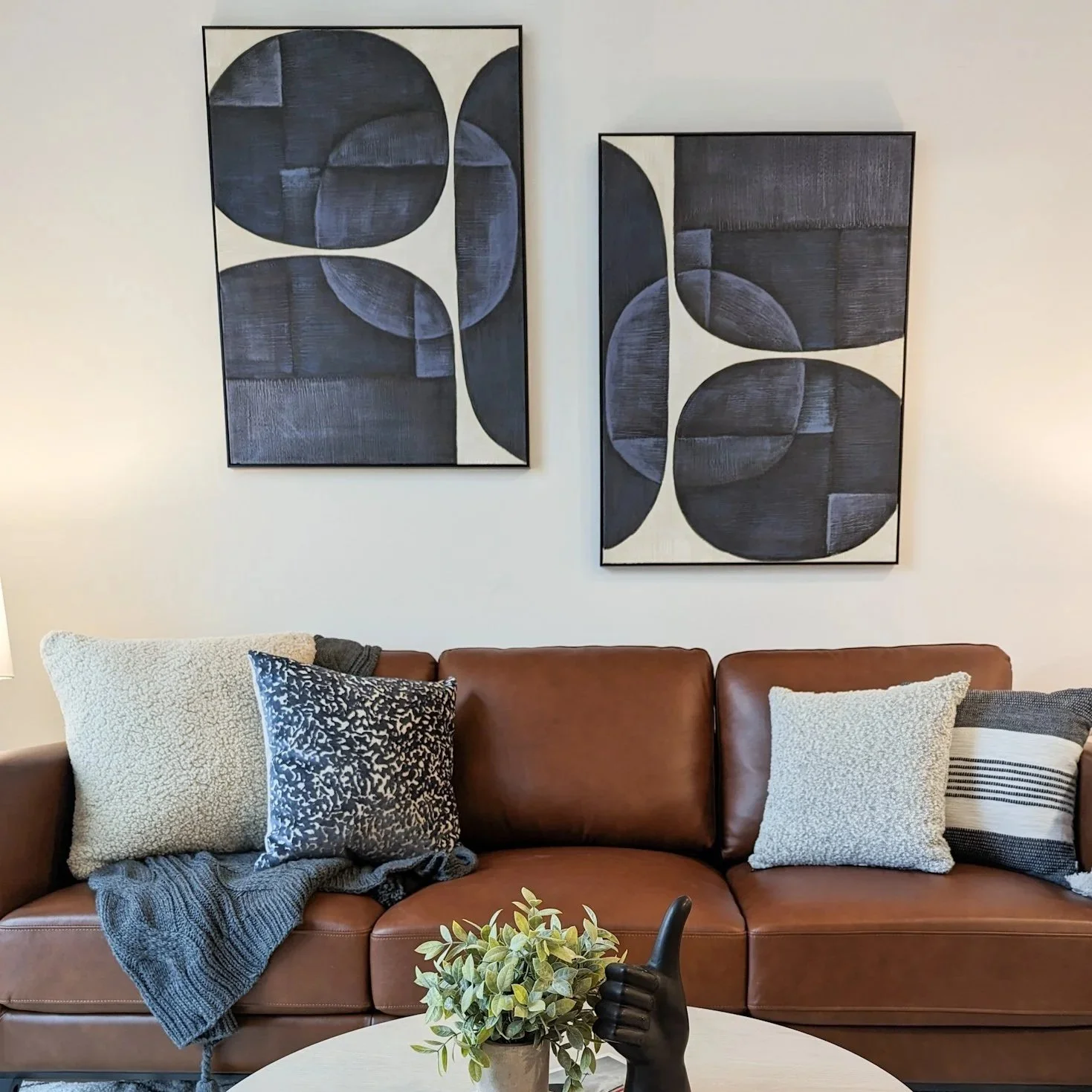
Yesterday, I was tasked with helping a client choose some art for a blank wall. This particular wall was sandwiched between an entire wall of windows and a focal wall with a diptych already hung perfectly above the sofa. In my email response back, I took the client with me on a long walk through my thought process of what wouldn’t work and why, and finally settled on something that I think checked all the boxes. What is interesting to me is that all of those thoughts on what the options were and why I wouldn’t choose them is so obvious to me, because I make decisions like that everyday. My clients don’t always understand why I suggest what I do, because they aren’t in my head, they don’t have the experience that I have, so today I thought it would be fun to share my philosophy on art and why I think that way.
What Do I Consider to be “Art”?
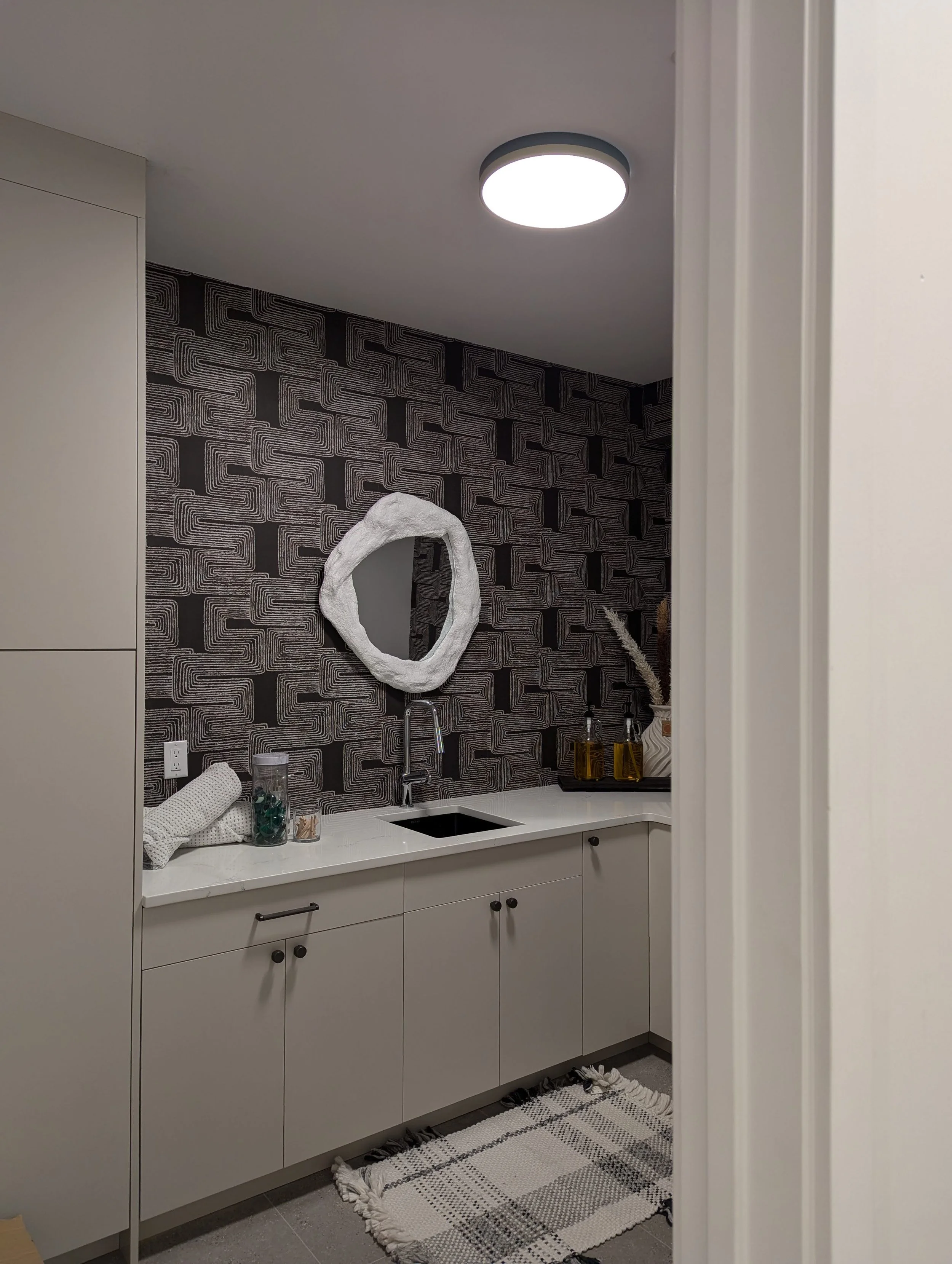
Art can be so personal, so rather than focusing on the content of the piece, I prefer to look more at the shape, frame (if there is one), colors, size and material. I also include anything that can be hung on a wall in my broad terms of “art,” so it could be a mirror, 3D objects, shelving or sometimes lighting fixtures. How I choose what goes where is also determined by the clients’ tastes or the style we are trying to achieve. A more eclectic style would allow for more variation in art, while a more traditional or gallery style might call for similar frames and sizing. Regardless of the style, I want the spacing and the variation to be pleasing, and for some styles pleasing can mean different things.
Before I get to how I mix my art, here are is how I classify what each type and setting is:
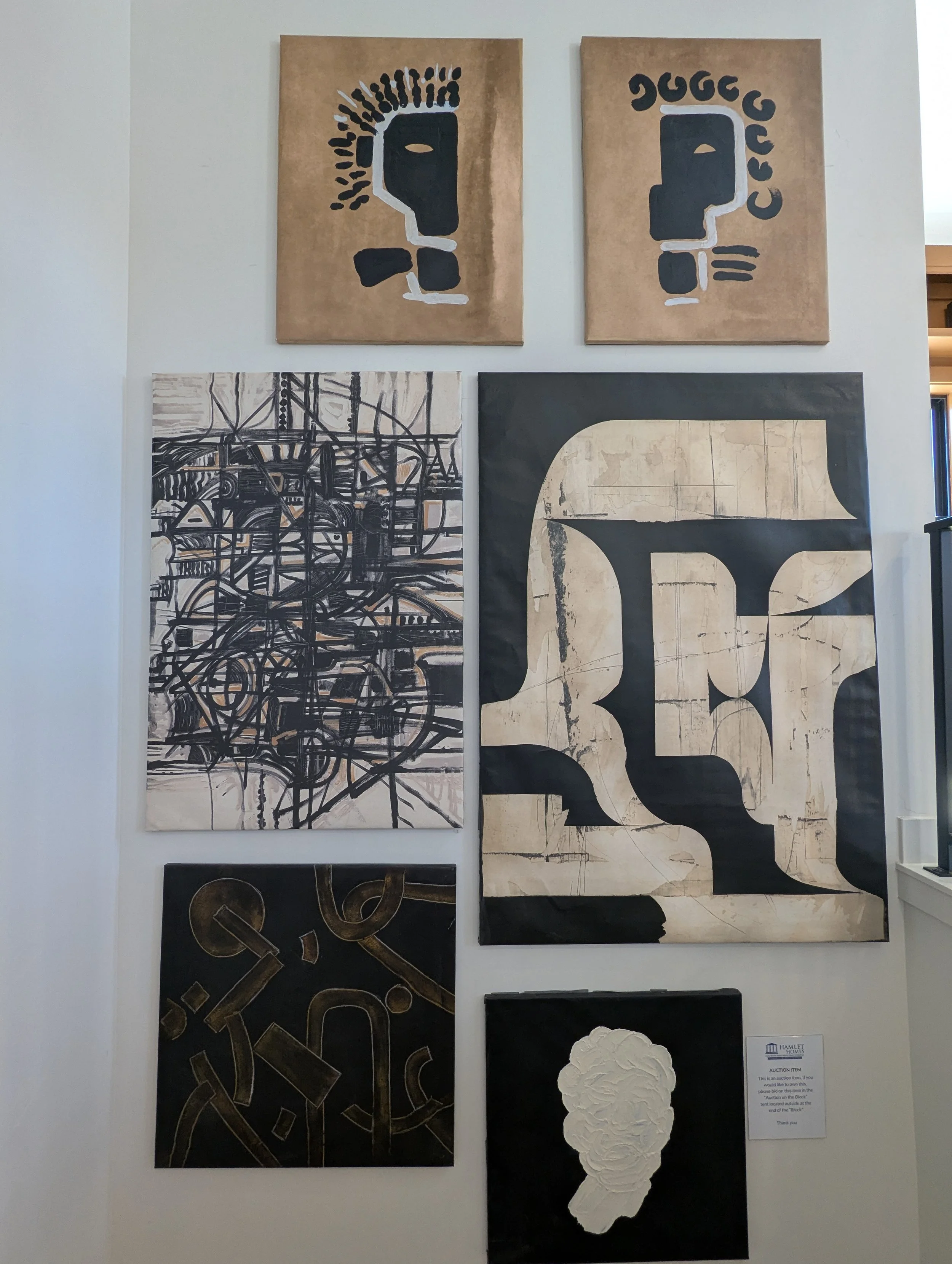
Gallery Walls
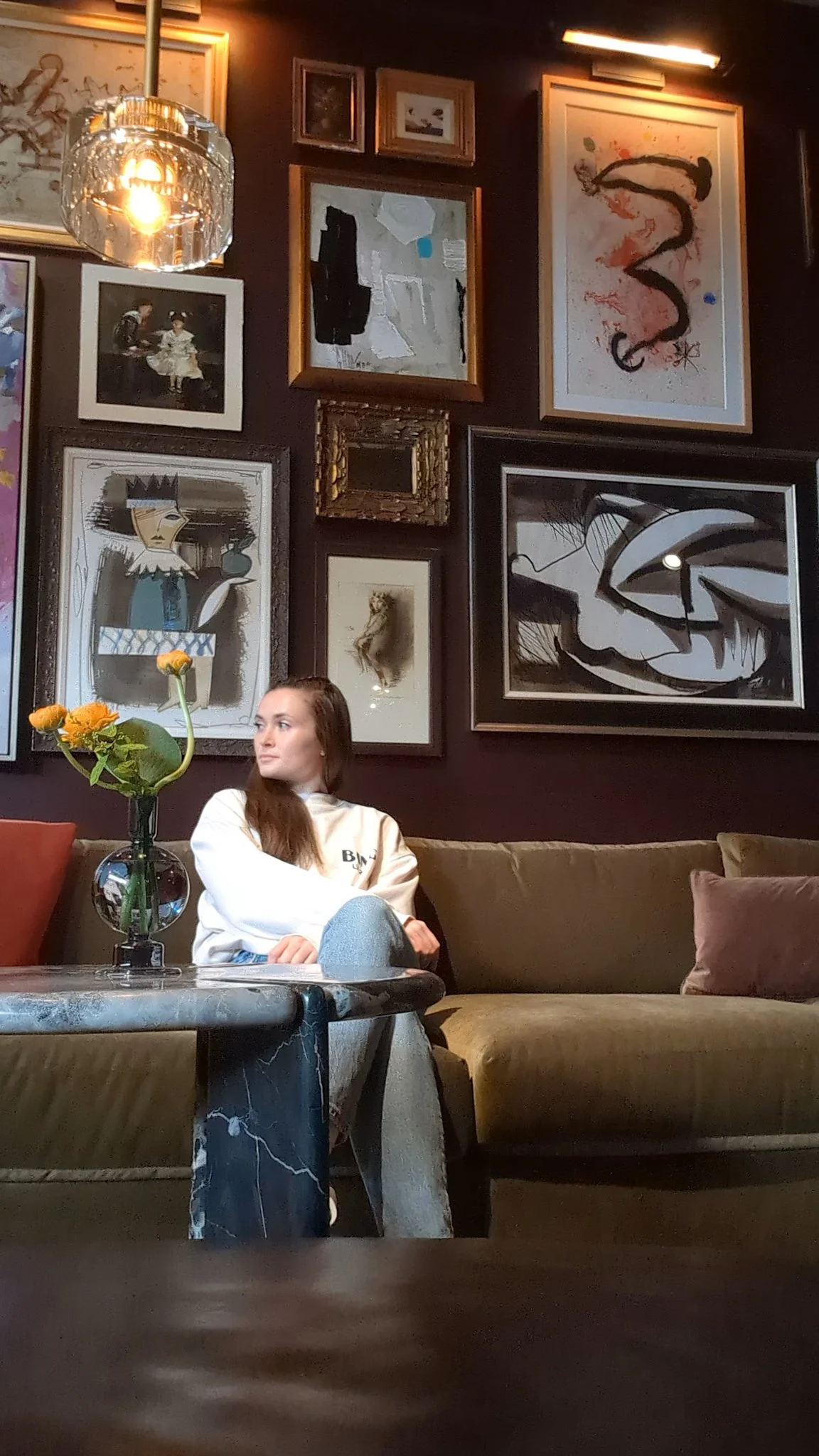
There are a few different types of gallery walls, but let’s start with traditional: For this style, I think of similar frames and matting, all spaced evenly in a grid. All the frames should be the same color and preferably the subject inside the frames would be cohesive in subject and/or coloring.
I usually do more of an eclectic mix style of gallery wall. This is usually because the client has photos, art, and travel mementos that they want grouped together. Occasionally, the client also has old frames that they want to reuse. This style lends itself to having different colors of frames, different sizes of pieces and a few 3D objects mixed in.
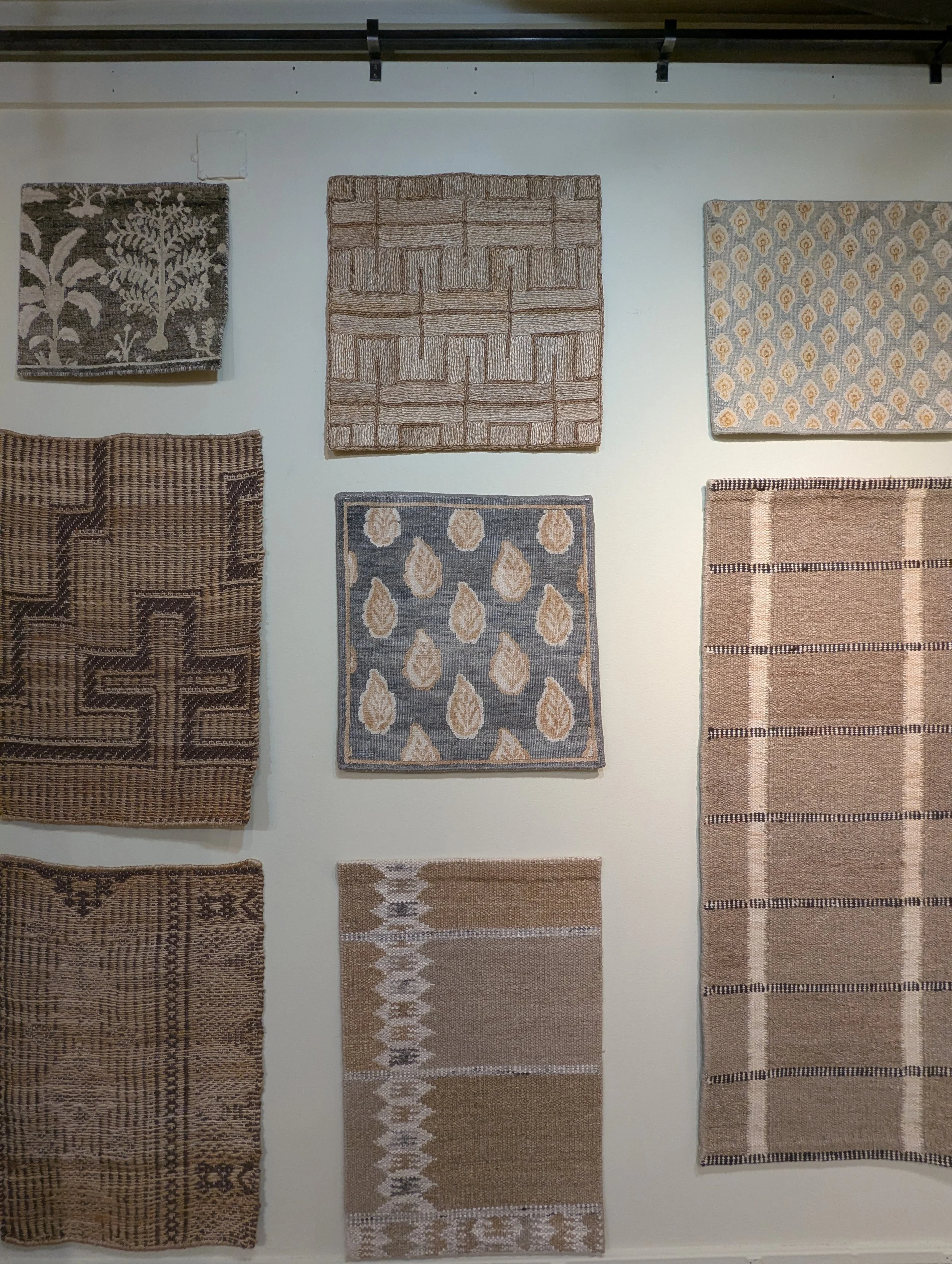
Either of these styles could be hung on a wall, grouped onto art shelves, or even hung from a picture rail system. I generally use this term to classify three or more pieces grouped close on one wall.
Singular Piece
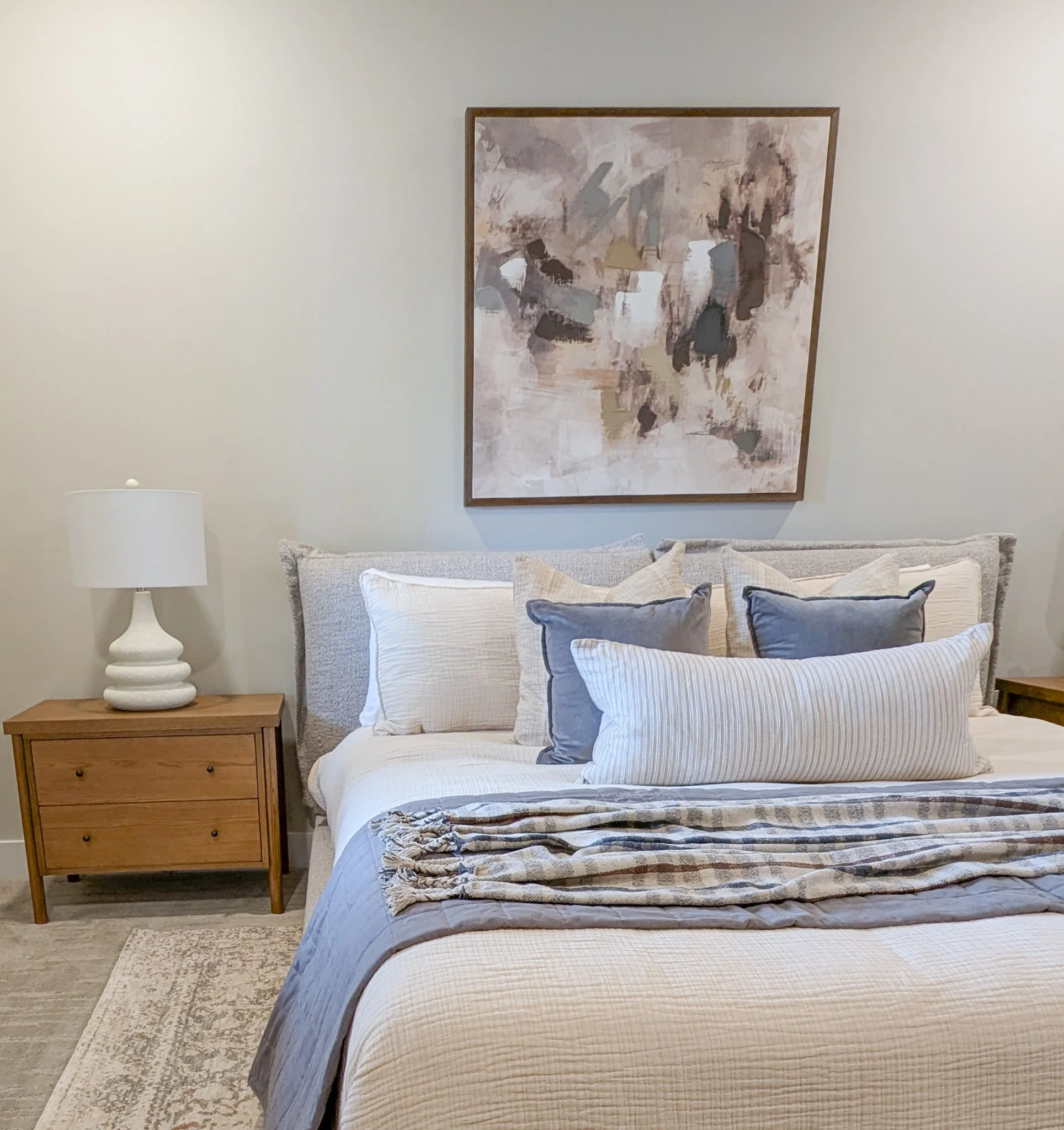
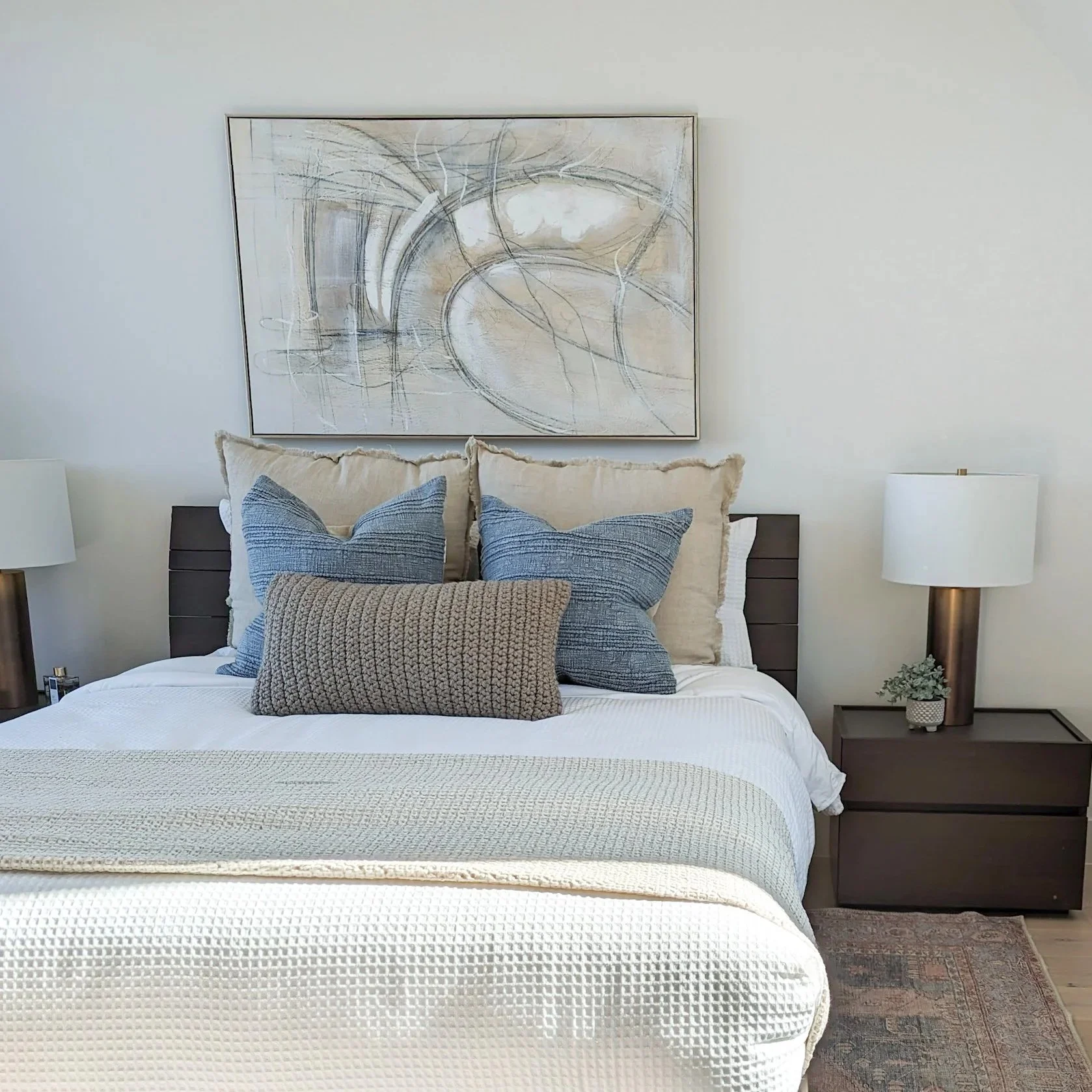
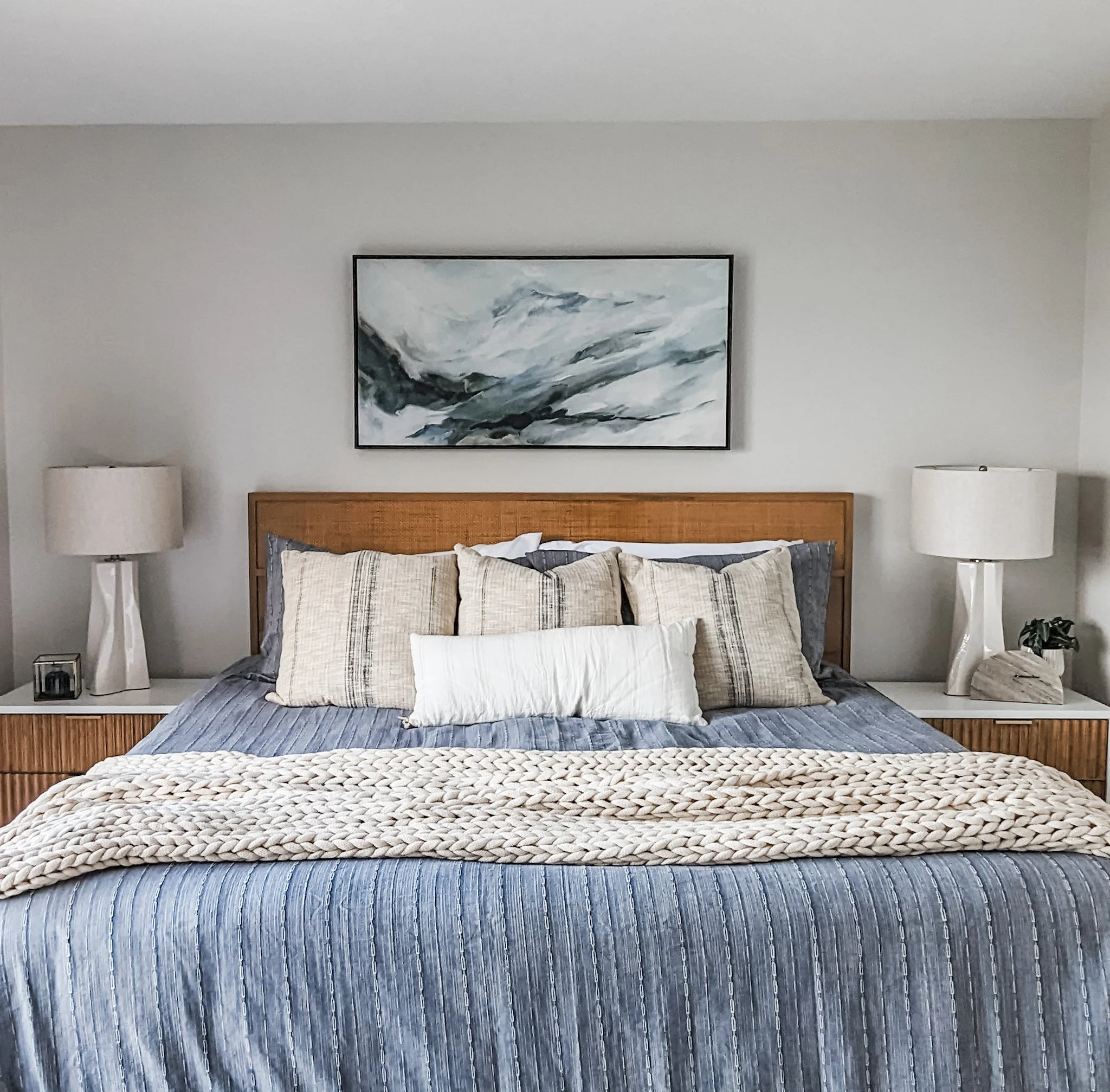
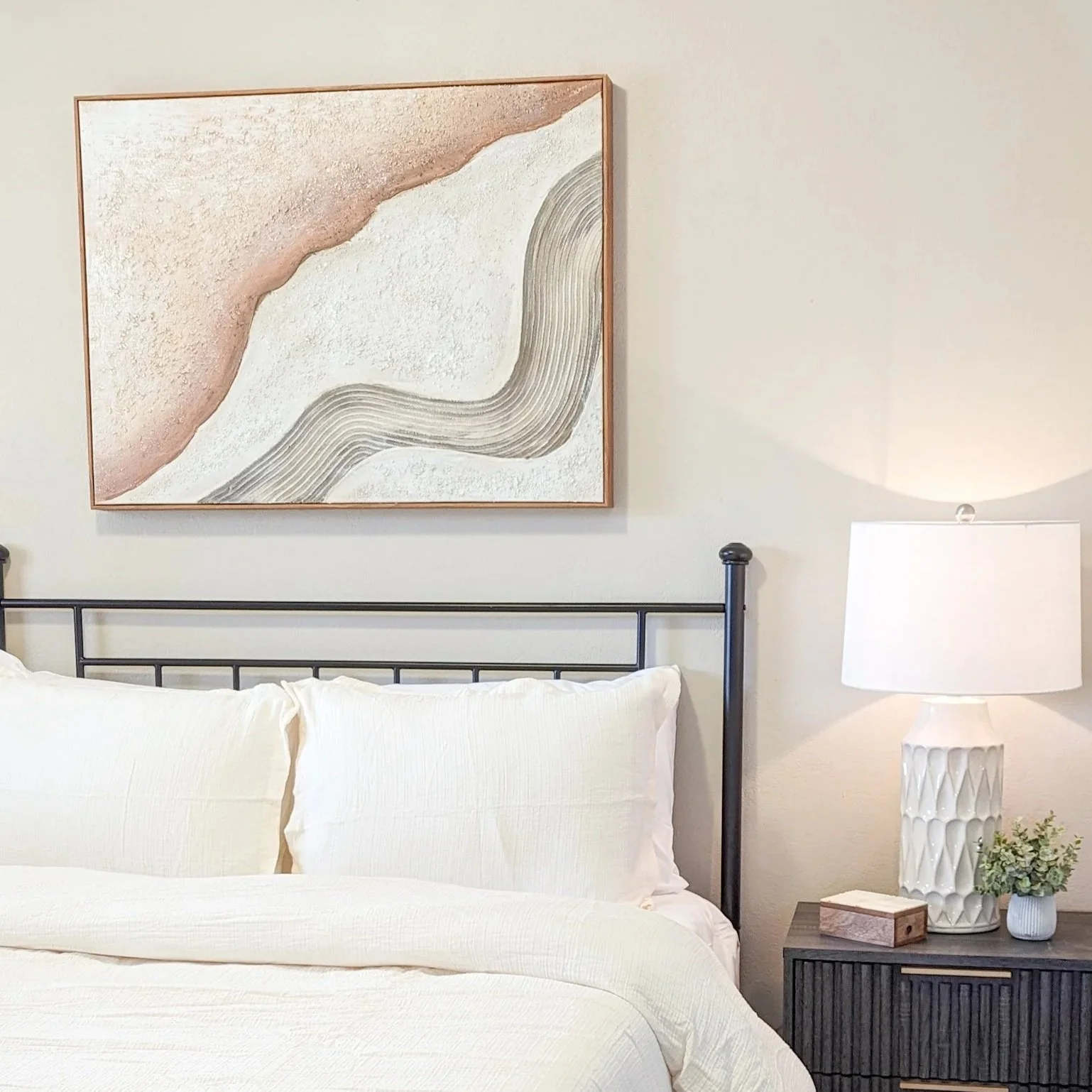
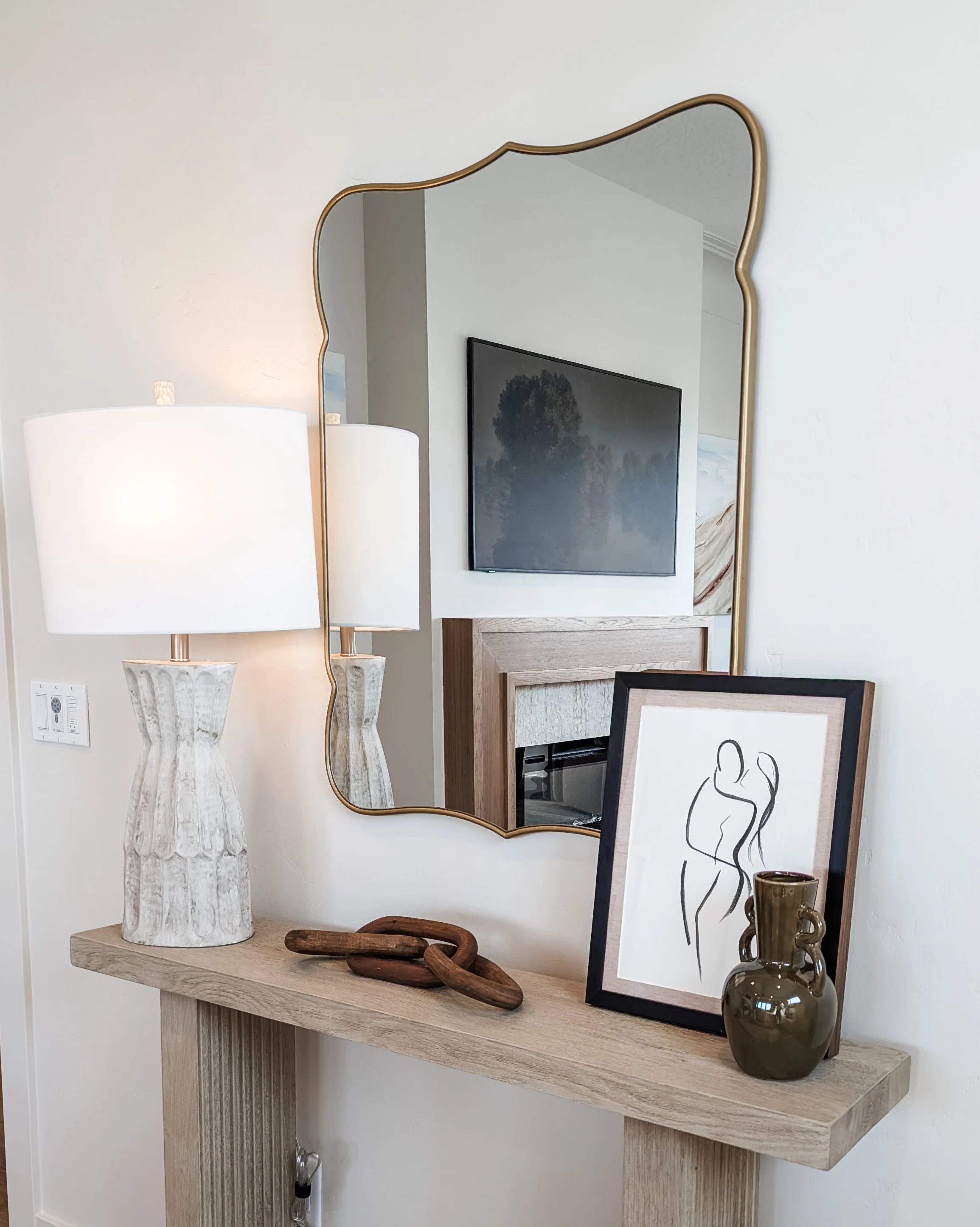
Singular piece seems pretty self-explanatory; it is one piece or art, mirror or object. And while that is true, I also use this to identify a singular piece or art with a picture light or with side sconces.
Diptych or Triptych
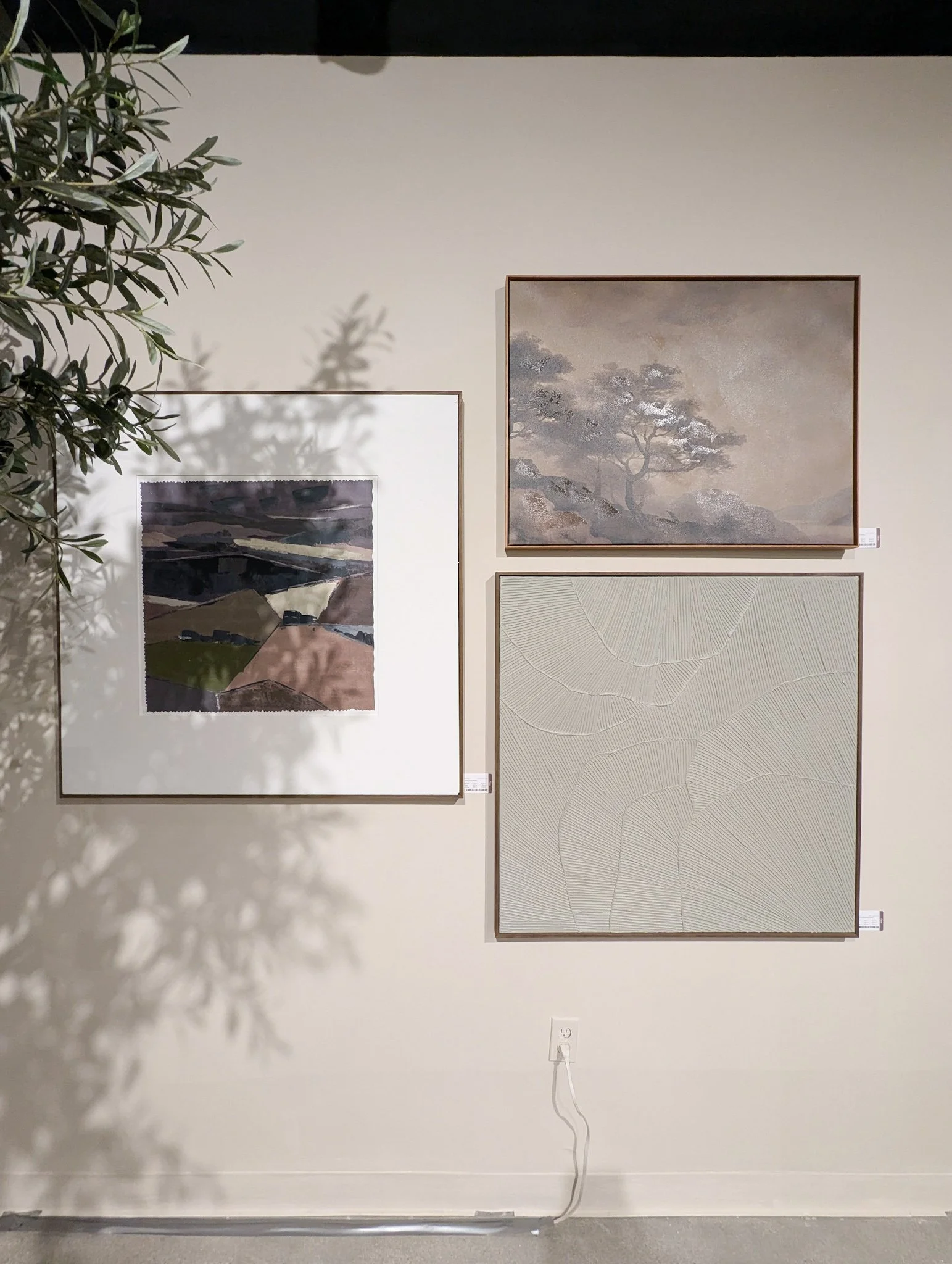
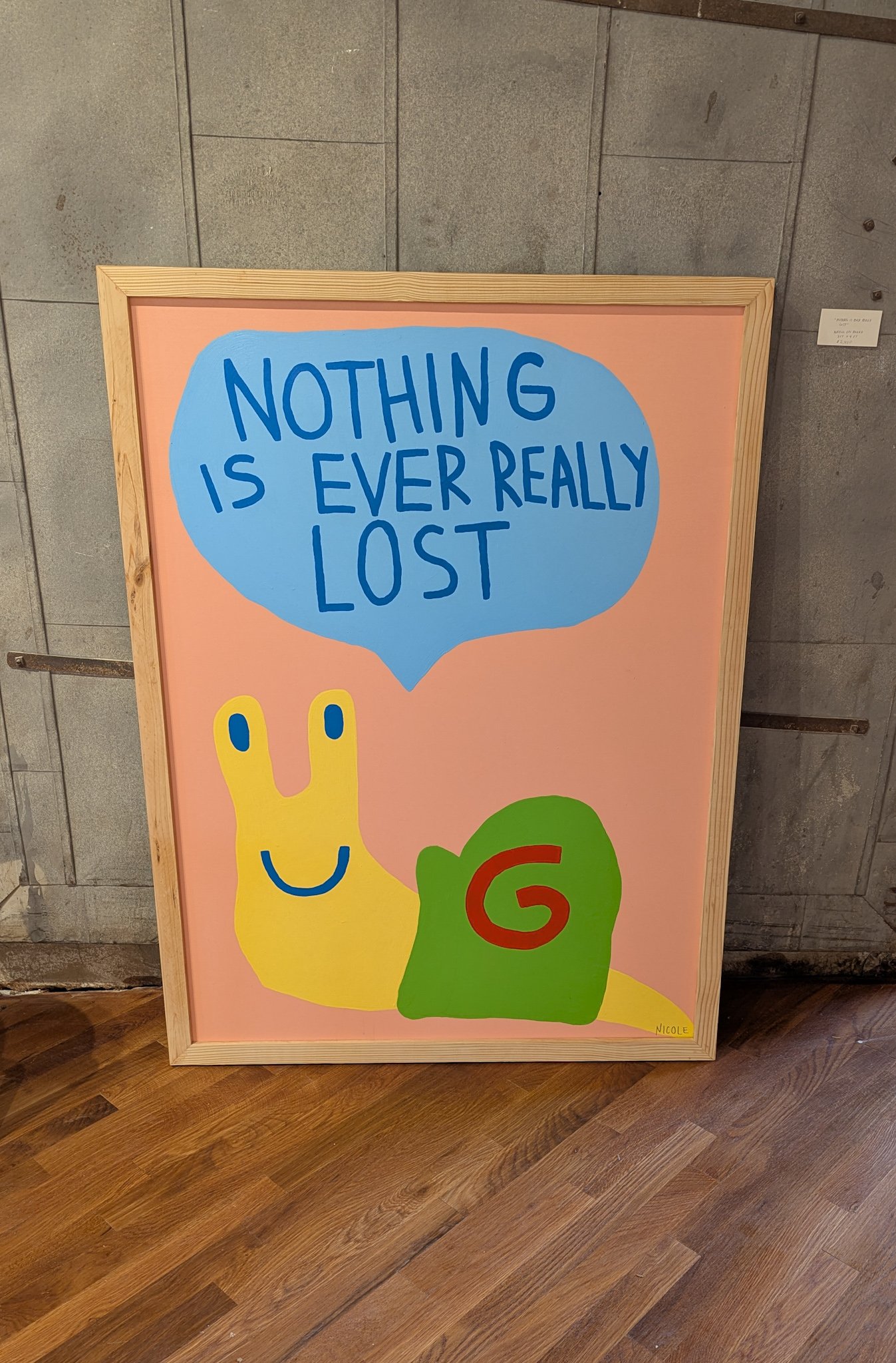
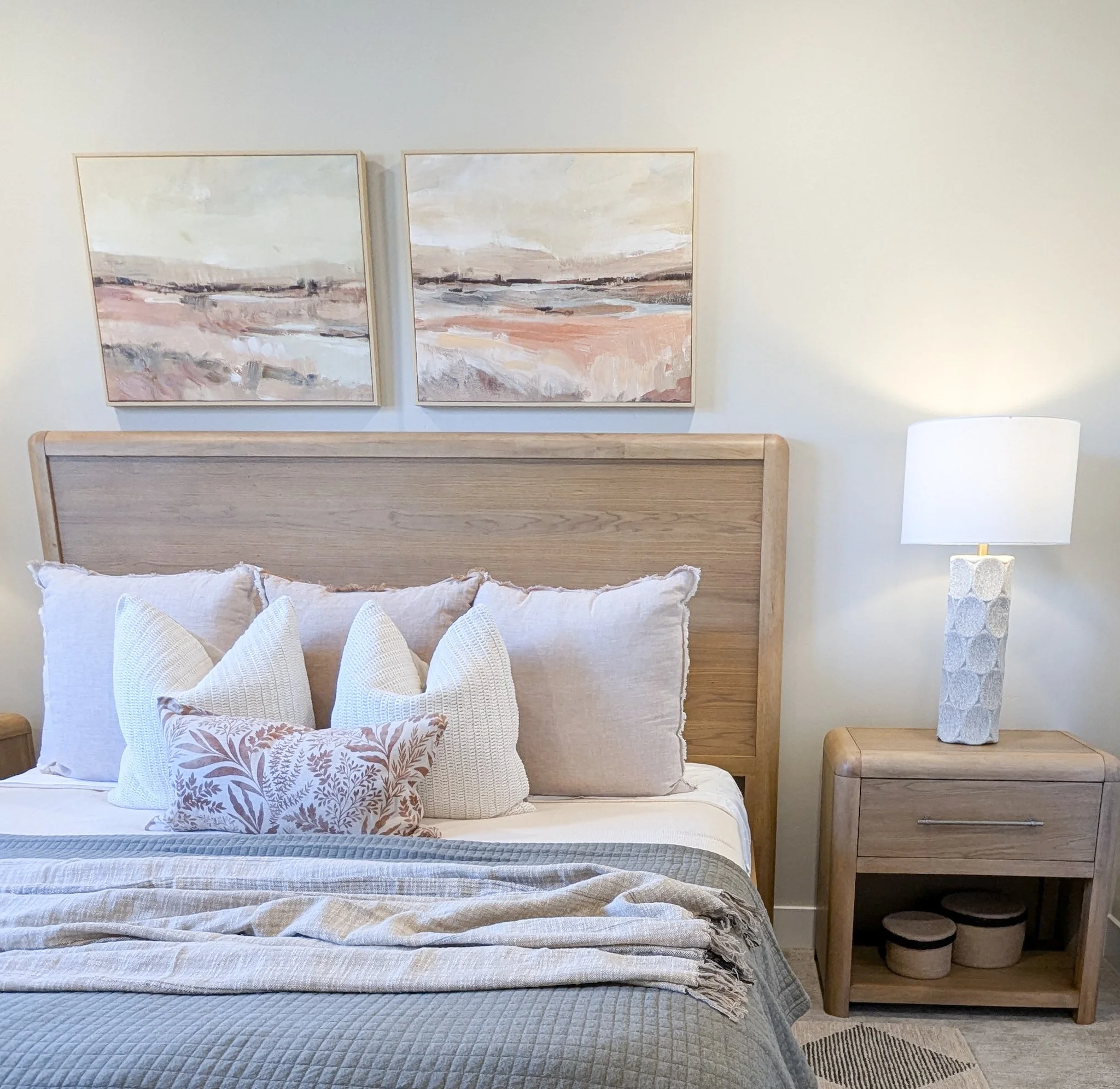
These are two (diptych) or three (triptych) pieces of art that are shown together as a series. They are usually one scene, the same size, and have the same frame (or no frames at all). I would classify a triptych differently from a gallery wall, but using the definitions I’ve given, they technically could be classified as both.
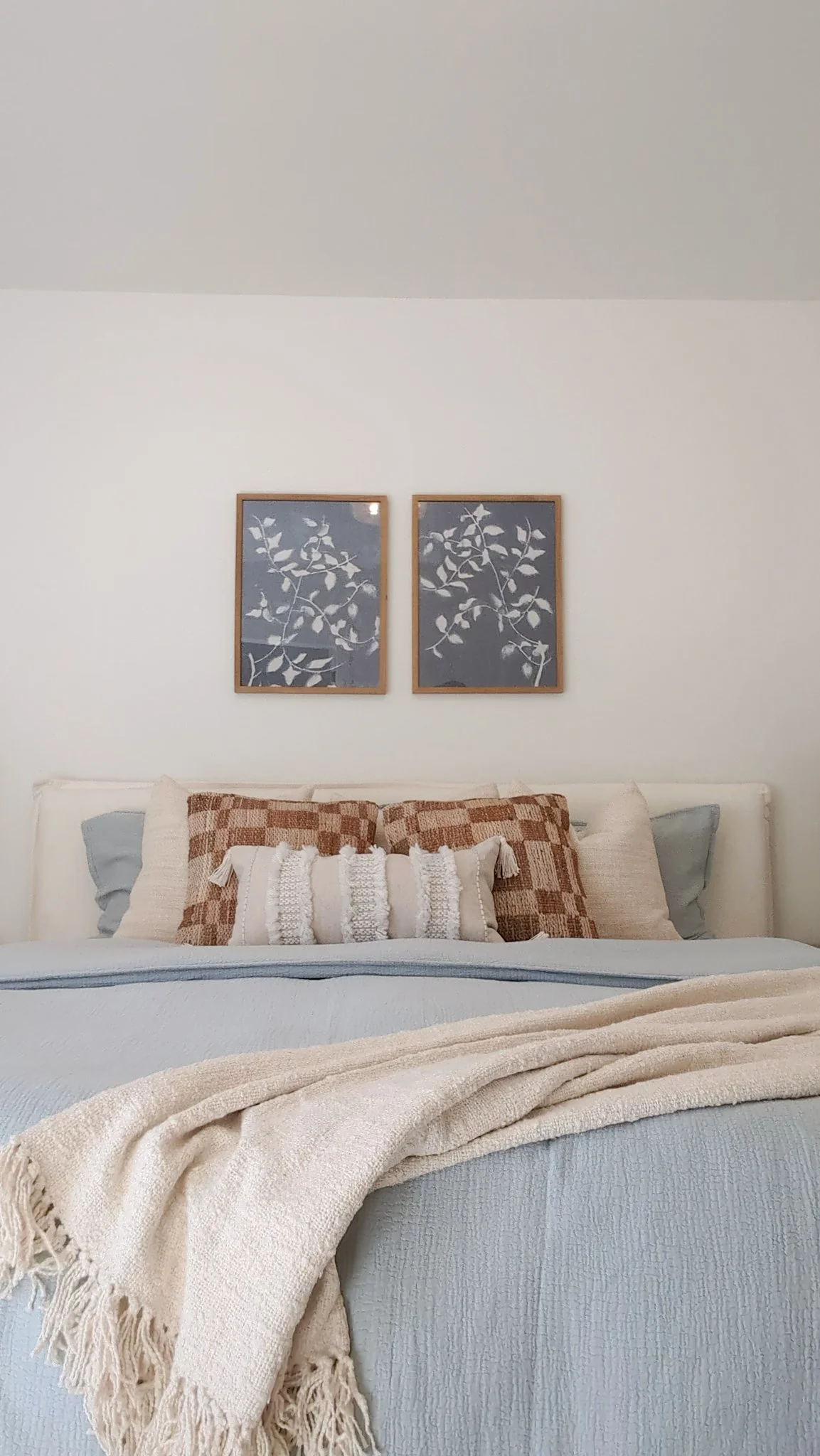
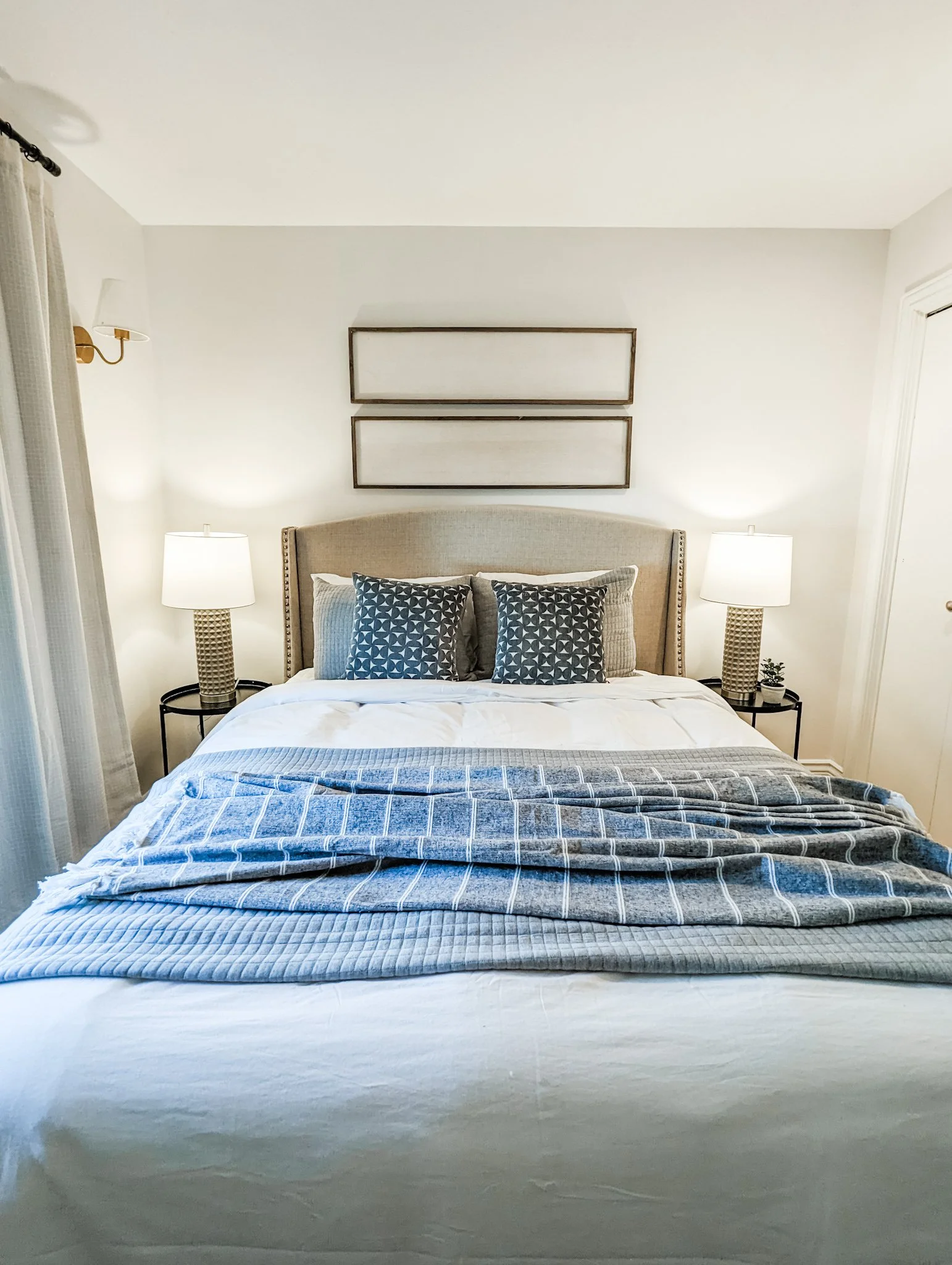
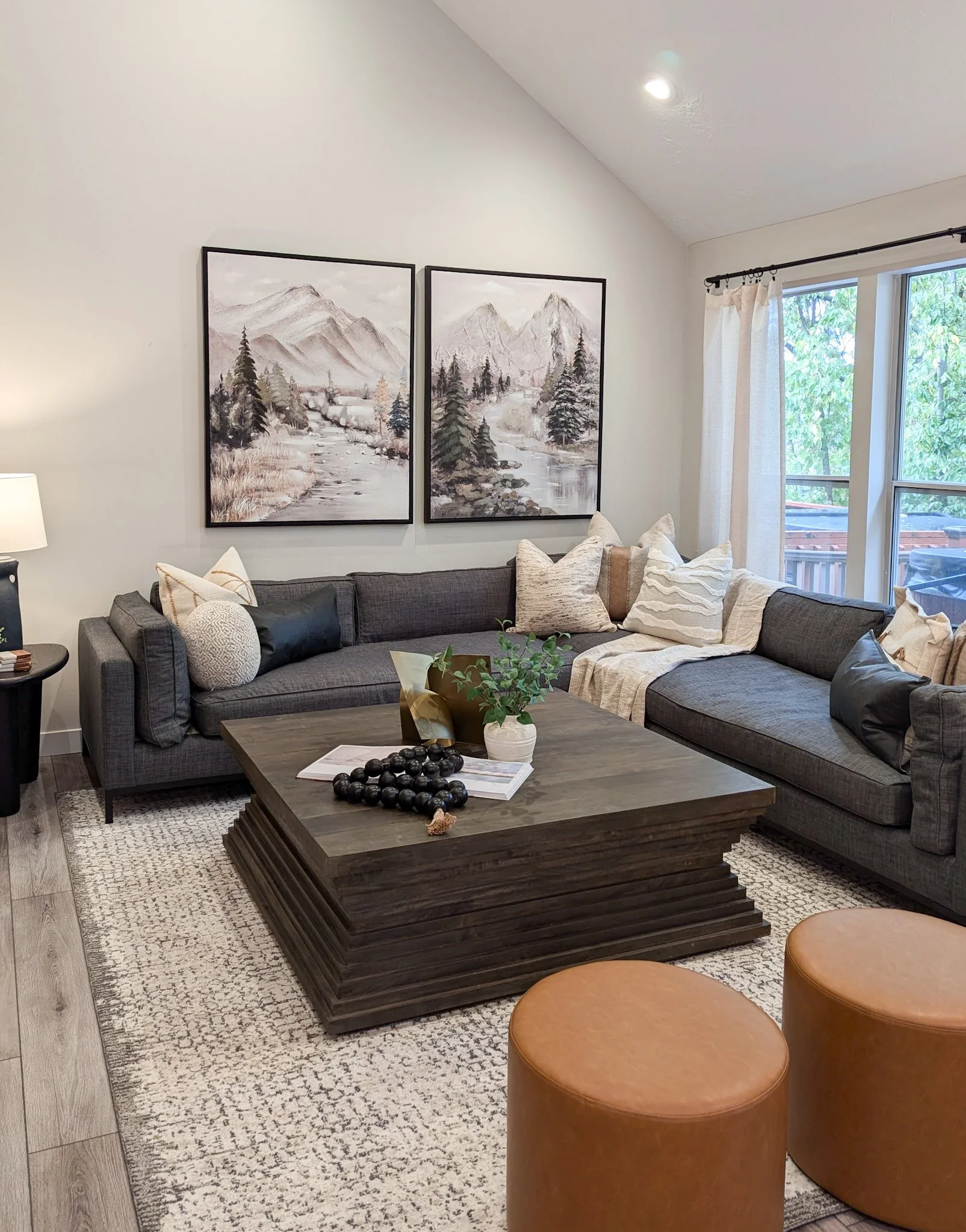
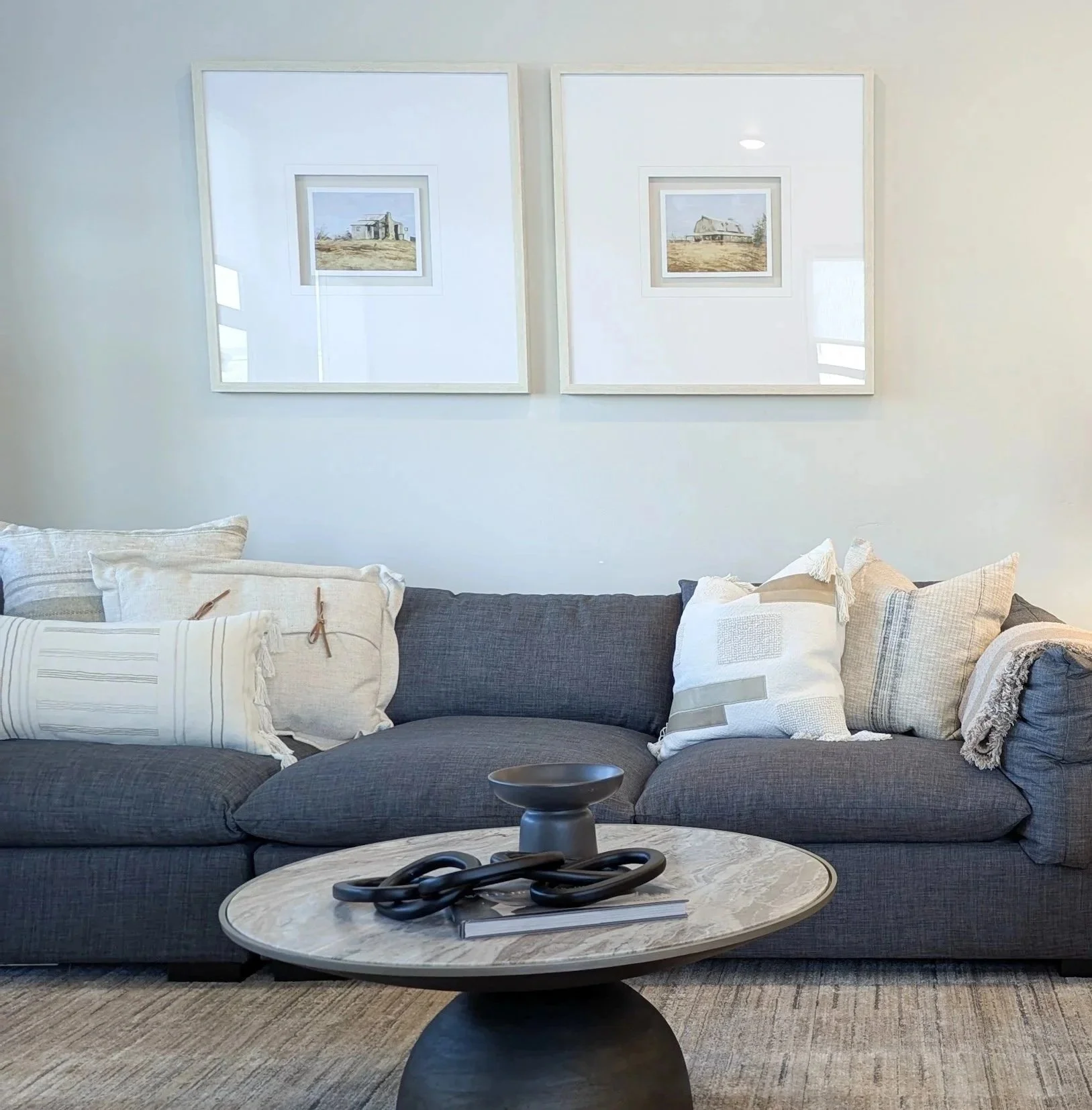
A Stack
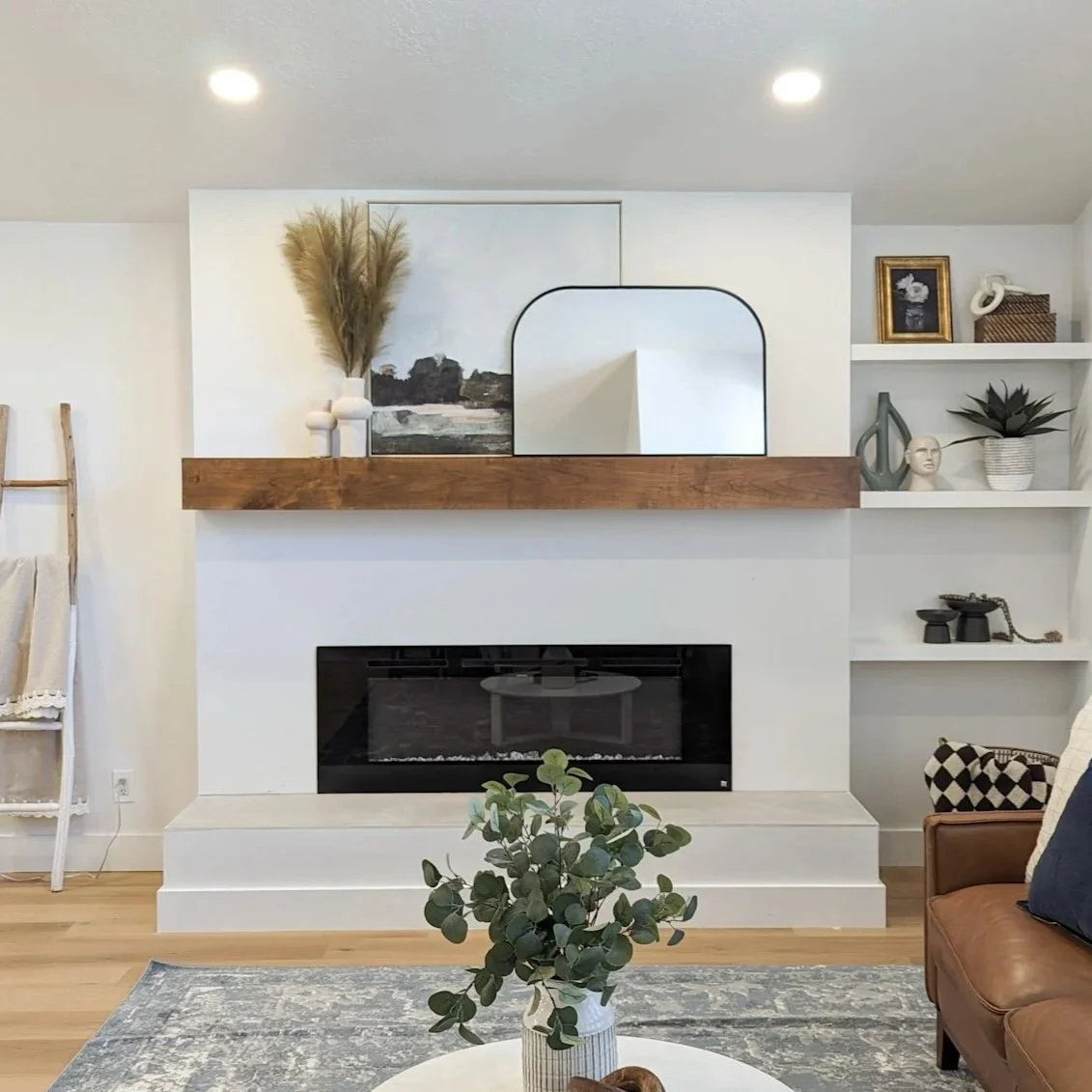
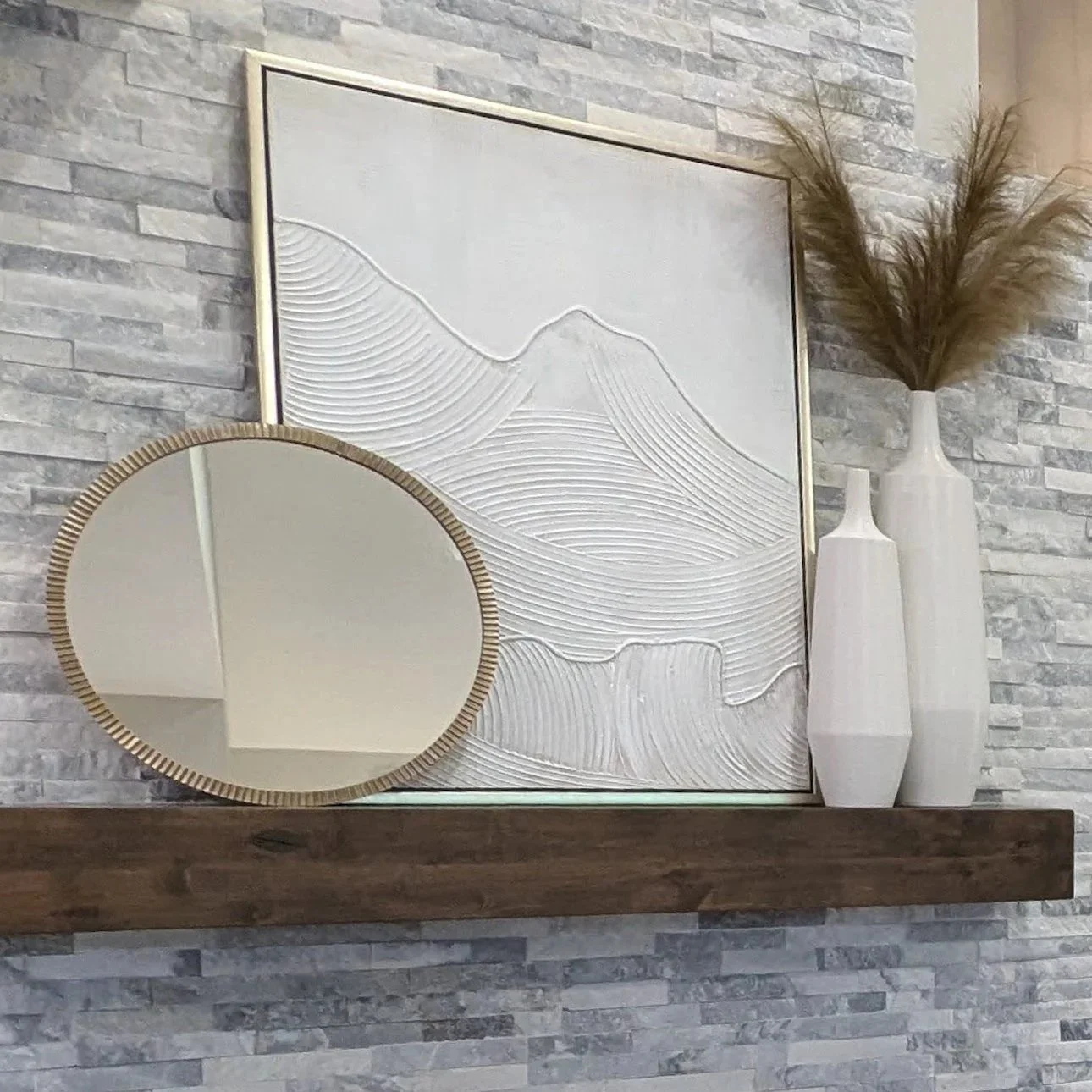
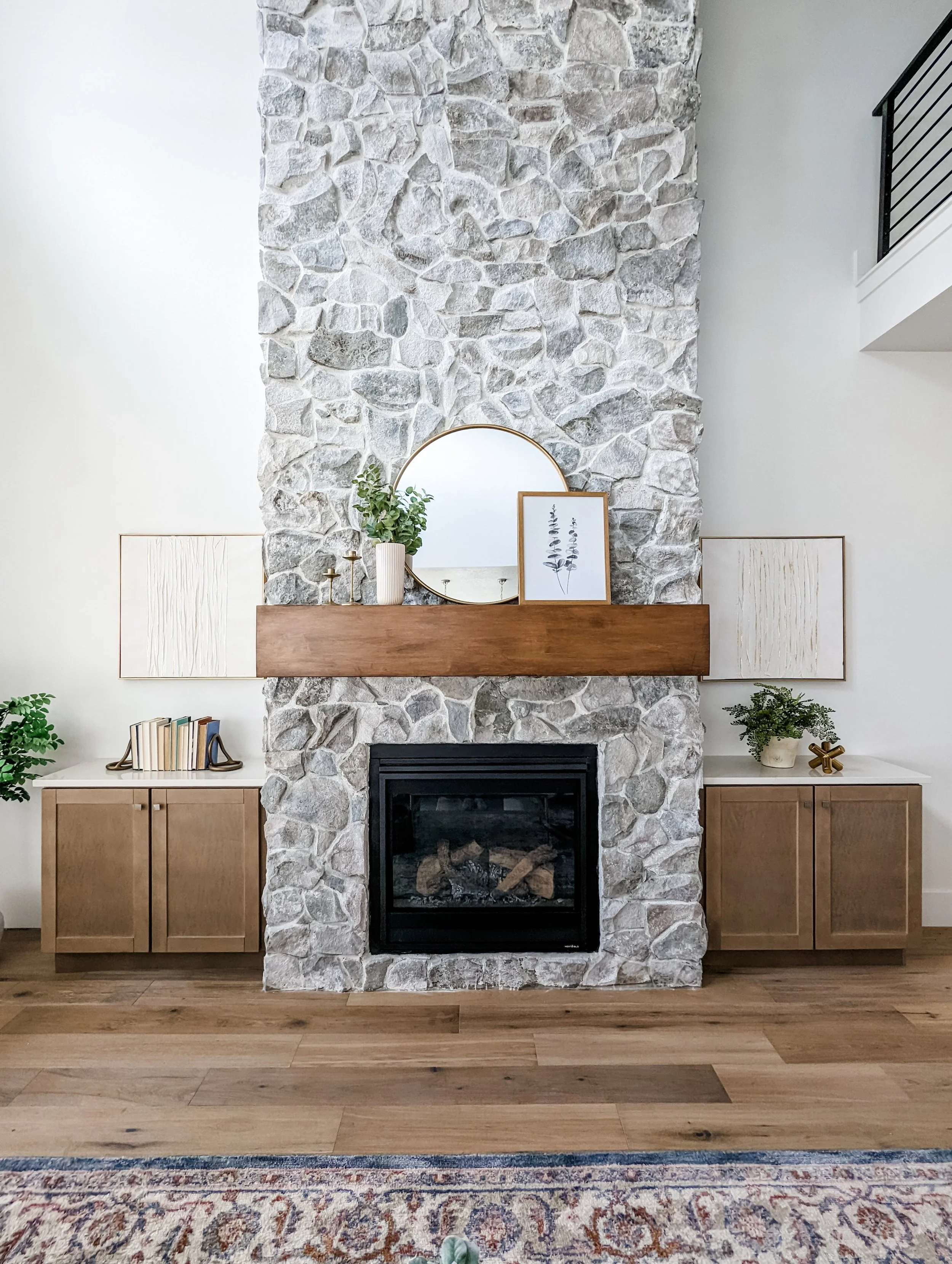
In my head, a stack is two pieces of art stacked on top of each other vertically, if hung on a wall, or stacked one in front of the other, if set leaning on a mantle or a credenza. If I am hanging on a wall, they could be diptychs, but I also like to stack pieces that have different frames, different shapes, or one canvas and one 3D object. If I am leaning on a wall, I do one large and one small piece. These could be framed canvas, pictures or an art piece and a mirror. If you add more than two pieces, this starts turning into a gallery wall.
My Philosophy
So now that you know my definitions of what each classification means to me, here’s how I style all the different types:
I like to start with either the biggest wall or the focal point, sometimes they are the same, but about half the time they aren’t. Think a living room with a fireplace and a long wall behind the sofa with no windows. Those are the two areas that will need the largest pieces of art, so that is where I start. If the client wants a TV above the fireplace (I suggest a Frame TV), that will immediately dictate the shape that I WON’T want to use over the sofa: horizontal rectangle. In this case, I would opt for a gallery wall, a vertical diptych or triptych, or a singular piece in a different shape.
If they don’t want a TV above the fireplace, I can do a singular mirror, or a stacked mirror and canvas or framed piece. That leaves the sofa wall open for pretty much anything except another mirror.
If there are any other walls in the same space, or if the room is open to another space with visible art, my general rule of thumb is to never have two of the same category of art within the same eyeline. The reason for this is that I don’t want to feel like a space is too boring (all singular pieces with the same shape) or too busy (every wall a gallery wall). There should be places where your eyes rest, and places with more visual interest. That is what makes a perfectly balanced space. I also never want to see two of the same type of art or subject like two mirrors in the same room or only farmhouse landscapes, but that can also depend on the client’s personality and preferred style.
Now, there are always exceptions to every rule; more important than my philosophy on art, this is my philosophy on design! Maybe your style is more like a clean museum where each piece has it’s own moment. Maybe you are super into Grandma Chic and you want a gallery wall right next to your plate wall. Whatever your style and preference, I hope this helps you identify why a particular room feels off, or how to make a space feel more balanced. If you still need more help, get in touch; I would be happy to help you out!
